
All Scholars
JOCELYN, Henry David
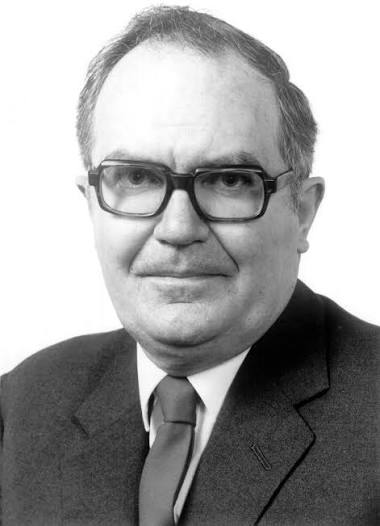
- Date of Birth: August 22, 1933
- Born City: Bega
- Born State/Country: New South Wales
- Parents: John Daniel, a police constable, NSW Police Force, and Phyllis Irene Burton J.
- Date of Death: October 22, 2000
- Death City: Oxford
- Death State/Country: England
- Married: Margaret Jill Morton, 22 October 1958, Rome.
- Education:
Earlwood Primary School & Canterbury Boys' High School, Sydney; B.A. University of Sydney, 1955; first-class honours with University Medals in both Latin and Greek; affiliated student, St John's College, Cambridge, 1955-7; starred first in Part II of the Classical Tripos; Sandys Studentship, 1957; Craven Studentship, 1958; scholar, British School at Rome, 1957–9; Ph.D., Cambridge, 1963.
- Dissertation:
“Archaic Roman Tragedy” (Cambridge, 1963).
- Professional Experience:
Lecturer in Latin, University of Sydney, 1960; senior lecturer, 1964; reader, 1966; personal chair, 1970; vis. prof., Yale, winter 1967; Hulme Professor of Latin, Manchester, 1973–96; researcher, 1996-2000; fellow, Australian Academy of the Humanities, 1970; British Academy, 1982; D.Litt. (hon.), University of Sydney, 1995.
- Publications:
“Ancient Scholarship and Virgil's Use of Republican Latin Poetry, I,” CQ 14 (1964) 280-95; “Ennius, Varia 14 V²,” CR15 (1965) 146-9; “Ancient Scholarship and Virgil's Use of Republican Latin Poetry, II,” CQ 15 (1965) 126-44; “Cicero, Ad Atticum i,18,1,” CR 16 (1966) 149-50; “Plautus, Rudens 83-88,” CR 16 (1966) 148; “The Roman Nobility and the Religion of the Republican State,” JRH 4 (1966) 89-104; The Tragedies of Ennius (Cambridge: Cambridge U. Press, 1967); “The Roman Nobility and the Religion of the Republican State,” JRH 4 (1966-7) 89-104; “The Quotations of Republican Drama in Priscian's Treatise De metris fabularum Terenti,” Antichthon 1 (1967) 60-9; “Chrysalus and the Fall of Troy (Plautus, Bacchides 925-978),” HSCP 73 (1969) 135-52; “Imperator histricus,” YCS 21 (1969) 97-123; “The Fragments of Ennius' Scenic Scripts,” LAC 38 (1969) 181-217; “The Poet Cn. Naevius, P. Cornelius Scipio and Q. Caecilius Metellus,” Antichthon 3 (1969) 32-47; “Euripides, Medea 108-10,” PCPS 16 (1970) 42-3; “Donatus ad Ter. Ad.537,” Mnemosyne 24 (1971) 90-1; “Horace, Odes 12.33-36,” Antichthon 5 (1971) 68-76; “Two Plautine Names, Milphio and Milphidippa,” CR 21 (1971) 331; “Urbs augurio augusto condita, Ennius ap. Cic. Div. I,107 ( = Ann. 77-96 V²),” PCPS 17 (1971) 44-74; “Ennius as a Dramatic Poet,” in Ennius: sept exposés suivis de discussions, ed. Ottos Skutsch (Geneva-Vandoeuvres: Fondation Hardt, 1972) 39-95; “Ennius as a Dramatic Poet, I,2,” ANRW (Berlin: De Gruyter, 1972) 39-95; Regnier de Graaf on the Human Reproductive Organs, trans. & commentary with B. P. Setchell(Supplement 17, Journal of Reproduction and Fertility, 1972); “Greek Poetry in Cicero's Prose Writings,” YCS 23 (1973) 61-111; “Homo sum; humani nil a me alienum puto,” Antichthon 7 (1973) 14-46; “Horace, Odes I,12.33-36. Some Final Remarks,” Antichthon 7 (1973) 62-4; “Ennius, Sat. 6-7 Vahlen,” RFIC 105 (1977) 131-51; “Catullus 58 and Ausonius, Ep. 71,” LCM 4 (1979) 87-91; “Horace, Epistles 1,” LCM 4 (1979) 145-7; “Vergilius' cacozelus (Donatus, Vita Vergilii44),” in Papers of the Liverpool Latin Seminar, II: Vergil and Roman Elegy, Medieval Latin Poetry and Prose, Greek Lyric and Drama, ed. Francis Cairns (Liverpool: Cairns, 1979) 67-142; “A Greek Indecency and Its Students. Λαικάζειν,” PCPS 26 (1980) 12-66; “Attic βινεῖν and English f....” LCM 5 (1980) 65-7; “Eupla laxa landicosa (CIL 4.10004),” LCM 5 (1980) 153-4; “Horace, Odes 2.5,” LCM 5 (1980) 197-200; “On Editing the Remains of Varro's Antiquitates rerum divinarum.” RFIC 108 (1980) 100-22; “On Some Unnecessarily Indecent Interpretations of Catullus 2 and 3,” AJP 101 (1980) 421-41; “The Fate of Varius' Thyestes,” CQ 30 (1980) 387-400; “Difficulties in Martial, Book I,” in Papers of the Liverpool Latin Seminar, III, ed. Francis Cairns (Liverpool: Cairns, 1981) 277-84; “Latin Popular Song and a Pompeian Graffito,” LCM 6 (1981) 145-8; “Servius Daniel. Ad Aen. IV 219, Macrobius Sat. III 2.7-9 and Varro Res div. fr. 66 (Cardauns),” GIF 33 (1981) 107-16; “Theocritus VII 61-2,” Mnemosyne 34 (1981) 316-21; “βινεῖν Yet Again,” LCM 6 (1981) 45-6; “Boats, Women, and Horace, Odes 1.14,” CP 77 (1982) 330-5; “Diatribes and Sermons,” LCM 7 (1982) 3-7; “Some Textual Difficulties in Plautus, Pseudolus 3-132,” Vichiana: Rassegna Internazionale di Studi Filologici e Storici11 (1982) 164-79; “Varro's Antiquitates rerum divinarum and Religious Affairs in the Late Roman Republic,” BRL 65 (1982) 148-205; “Servius and the Second Edition of the Georgics,” Atti del Convegno mondiale scientifico di studi su Virgilio. Mantova, Roma, Napoli 19-24 settembre 1981, I (Milan: Mondadori, 1982) 431-48; “Diatribes and the Greek Book-Title Διατριβαί,” LCM 8 (1983) 89-91; “Lucretius 4, 1263-77,” Proceedings of the African Classical Association 17 (1983) 53-8; “The Punctuation of Semonides, fr. 7.73-7,” LCM 8 (1983) 48; “Anti-Greek Elements in Plautus' Menaechmi?, IV,” Papers of the Liverpool Latin Seminar, IV (Liverpool: Cairns, 1984) 1-25; “Cicero, Philippic 12.24 and the Uses of gremium in Classical Latin,” LCM 9 (1984) 17-21; “The Annotations of M. Valerius Probus,” CQ 34 (1984) 464-78; “The Authenticity of Some Paragraphs of Celsus' Medical Work in a Fifteenth-Century Codex,” RPL 7 (1984) 101-6; “Urania's Discourse in Cicero's Poem On his consulship. Some Problems,” Ciceroniana 5 (1984) 39-54; “Caecilius, Com. 142-157,” LCM 10 (1985) 10-11; “Caecilius Com. 150-152, and Asyndeton in Early Latin Noun Pairs,” LCM 10 (1985) 43; “Charinus Cunnilingus (Martial i,77),” LCM 10 (1985) 41-2; “The Annotations of M. Valerius Probus: II,” CQ 35 (1985) 149-61; “The Annotations of M. Valerius Probus: III: Some Virgilian Scholia,” CQ 35 (1985) 466-74; “Ennius, Annales 194-196 (Vahlen) (183-185 Skutsch) and Richard Bentley,” LCM 11 (1986) 103; “Gli studi del Poliziano sulla poesia latina arcaica,” in Validità perenne dell'Umanesimo. Angelo Cini de' Ambrogini e la universalità del suo umanesimo. Atti del XXV Convegno internazionale (1983). L'Umanesimo nel passato e nel presente. Atti del XXVI Convegno internazionale (1984) (Forence: Olschki, 1986) 133-9; “Lucretius, his copyists and the horrors of the underworld (De rerum natura 3.978-1023),” AClass 29 (1986) 43-56; “Propertius and Archaic Latin Poetry,” in Bimillenario della morte di Properzio. Atti del convegno internazionale di studi properziani, Roma-Assisi, 21-26 maggio 1985 (Assisi: Accad. Properziana del Subasio, 1986) 105-36; “The New Chapters of the Ninth Book of Celsus' Artes, V,” Papers of the Liverpool Latin Seminar, V 1985, ed. Francis Cairns, F. Williams, S.S. Cairns & Neil Adkin (Liverpool: F. Cairns, 1986) 299-336; “Plautus, Miles gloriosus 209-212,” Sileno 13 (1987) 17-20; “Studies in the Indirect Tradition of Plautus' Pseudolus, II: I : Rufinus, Pliny, Varro,” in Filologia e forme letterarie. Studi offerti a Francesco della Corte(Urbino: Ed. Quattro Venti, 1987) 57-72; “Plautus, Casina 67-78,” Sileno 14 (1988) 17-24; “Silius and Republican Latin Literature,” LCM 13 (1988) 131-3; “Studies in the Indirect Tradition of Plautus' Pseudolus: III: The ‘Archaising Movement’, Republican Comedy and Aulus Gellius' Noctes Atticae,” in Vir bonus discendi peritus. Studies in Celebration of Otto Skutsch's Eightieth Birthday, ed. Nicholas Horsfall (London: Institute of Classical Studies, 1988) 57-72; “Valerius Flaccus and Ennius,” LCM 13 (1988) 10-11; “Australia, New Zealand: Greek and Latin Philology, I,” in La filologia greca e latina nel secolo xx. Atti del congresso internazionale, Roma, Consilio Nazionale delle Ricerche, 17-21 settembre 1984, I & II (Pisa: Giardini, 1989) 543-78; “Plautus, Captivi 887-9,” LCM 14 (1989) 28; “Romulus and the di genitales(Ennius, Annales 110-111 Skutsch),” in Studies in Latin literature and Its Tradition in Honour of C. O. Brink, ed. with James Diggle, John Barrie Hall (Cambridge: Cambridge U. Press, 1989) 39-65; “Silius 13.153. An Addendum,” LCM 54 (1989) 62; “Some Notes on Virgil, Probus, Servius and Servius Danielinus,” Sileno 15 (1989) 5-25; “Plautus, Poenulus200-202 and the Ballistarium,” LCM 15 (1990)5-8; “Riflessioni su ‘due nuovi frammenti’ della letteratura latina perduta e sulla filologia quattrocentesca, II,” in Homo sapiens, homo humanus, II: Letteratura, arte e scienza nella seconda metà del Quattrocento : atti del XXIX convegno internazionale del Centro di Studi Umanistici : Montepulciano, Palazzo Tarugi, 1987. Individuo e società nei secoli XV e XVI : atti del XXX convegno internazionale…, ed. Giovannangiola Tarugo (Florence: Olscki, 1990) 121-35; “The Ancient Story of the Imperial Edition of the Aeneid,” Sileno 16 (1990) 263-78; “The Sources of the Cornu copiae of Niccolò Perotti and Their Integrity: Some Methodological Remarks,” in Memores tui: studi di letteratura classica ed umanistica in onore di Marcello Vitaletti, ed. Sesto Prete (Sassoferrato: Istituto Internazionale Studi Piceni, 1990) 99-111; “L. Caecilius Minutianis Apuleius, I,” in Homo sapiens, homo humanus, I: La cultura italiana tra il passato ed il presente in un disegno di pace universale : atti del XXVII convegno internazionale del Centro di Studi Umanistici : Montepulciano, Palazzo Tarugi, 1985. La pienezza del significato « homo sapiens » e la necessaria ed. Giovannangiola Tarugo (Florence: Olscki, 1990) 207-18; “Giuseppe Giusto Scaligero e i falsi del Mureto, II,” in Homo sapiens, homo humanus, II: Letteratura, arte e scienza nella seconda metà del Quattrocento : atti del XXIX convegno internazionale del Centro di Studi Umanistici : Montepulciano, Palazzo Tarugi, 1987. Individuo e società nei secoli XV e XVI : atti del XXX convegno internazionale…, ed. Giovannangiola Tarugo (Florence: Olscki, 1990) 313-23; “Ennius and the Impregnation of Ilia,” Annali della Facoltà di Lettere e Filosofia, Università di Perugia 27 (1989-90) 19-46; “Ennius, Annales 115-116 V² = 110-11 Sk. Again,” Maia 43 (1991) 189-91; “Otto Skutsch †,” Gnomon 63 (1991) 746-9; “Review-Discussion [on R.A. Kaster],” LCM 16 (1991) 146-60; “Studies in the Indirect Tradition of Plautus' Pseudolus, II: II : Verrius Flaccus' De significatu uerborum,” in Studi di filologia classica in onore di Giusto Monaco, II: Letteratura latina dall'età arcaica all'età augustea (Palermo: Università degli Studi di Palermo, Facoltà di Lettere e Filosofia, 1991) 569-80; “The Status of the fabula togata in the Roman Theatre and the Fortune of the Scripts,” Dioniso 61 (1991) 277-81; “Virgil and Aeneas' Supposed Italic Ancestry,” Sileno 17 (1991) 77-100; “Aeneas Silvius Piccolomini's Chrysis and the Comedies of Plautus,” Res Publica Litterarum: 14 (1991) 101-14; “Le théâtre et l'histoire des textes des comédies de Plaute,” Pallas 38 (1992) 337-44; “Sesto Prete and the Comedies of Terence,” Res Publica Litterarum 15 (1992) 23-42; “Three Letters from W. M. Lindsay to E. K. Rand,” Sileno 18 (1992) 87-100; “Carm. 1, 12 and the Notion of a “Pindarising” Horace,” Sileno 19 (1993) 101-29; “Sprache, Schriftlichkeit und Charakterisierung in der römischen Komödie: (Plautus, Pseudolus 41-73, 998-1014),” in Beiträge zur mündlichen Kultur der Römer, ed. Gregor Vogt-Spira (Narr: Tübingen, 1993) 125-39; Tria Lustra: Essays and Notes Presented to John Pinsent, Founder and Editor of the Liverpool Classical Monthly, by Some of Its Contributors on the Occasion of the 150thIssue (ed.) (Liverpool: Liverpool Classical Monthly, 1993); “Some Observations on Valerius Aedituus ap. Gell. XIX 9, 12,” Eikasmos 5 (1994) 247-50; “The Finale of Plautus' Miles Gloriosus,” Sileno 20 (1994) 253-66; “The Stories of Caeculus,” in Scritti classici e cristiani offerti a Francesco Corsaro, ed. Carmelo Curti (Catania: Facoltà di Lettere e Filosofia Università degli Studi di Catania, 1994); “Two Features of the Style of Catullus' Phalaecian Epigrams,” Sileno 21 (1995) 63-82; “The Life-Style of the Ageing Bachelor and Theatrical Improvisation: (Plaut. Mil. 596-812),” in Plautus und die Tradition des Stegreifspiels: Festgabe für Eckard Lefèvre zum 60. Geburtstag, ed. Lore Benz, Ekkehard Stärk, & Gregor Vogt-Spira (Tübingen: Narr, 1995) 107-22; “Poeta and vates: Concerning the Nomenclatura of the Composer of Verses in Republican and Early Imperial Rome,” in Studia classica Johanni Tarditi oblata, ed. Luigi Belloni, Guido Milanese, & Antonietta Porro (Milan: Virta e Pensiero, 1995) 19-59; “Orazio e gli ἭΡΩΕΣ della poesia greca,”in Musis amicus: atti del convegno internazionale di studi su Q. Orazio Flacco, Chieti, 4-6 maggio 1993, ed. Maria Laetitia Coletti & Patrizio Domenicucci (Chieti: Editrice Vecchio Faggio, 1995) 23-30; “Charles Oscar Brink†,” Gnomon 67 (1995) 650-5; “Horace and the Reputation of Plautus in the Late First Century BC,” in Homage to Horace: A Bimillenary Celebration, ed. Stephen J. Harrison (Oxford & New York: Oxford U. Press, 1995) 228-47; “Aspects of Nineteenth-Century British Classical Scholarship: Eleven Essays” LCM (1996); “W. M. Lindsay’s Oxford Career,” in “Aspects of Nineteenth-Century British Classical Scholarship: Eleven Essays,” LCM (1996) 89-102; “C. Licinius Macer Calvus, fr. 18 Büchner,” Eikasmos 7 (1996) 243-54; “The Language of Catullus 17 and That of Its Immediate Neighbours in the Transmitted Collection,” Sileno 22 (1996) 137-62; “Plautus, Mil. 195-234: The Distribution of the Parts,” in Vir bonus dicendi peritus: Festschrift für Alfons Weische zum 65. Geburtstag, ed. Beate Czapla, Tomas Lehmann, Susanne Liell (Wiesbaden: Reichert, 1997) 211-217; † Charles Oscar Brink 1907-1994,” PBA 94 (1997) 319-54; “Giovanni Boccaccio's Interpretations of the Graeco-Roman Myths and the Constraints and Impulses of His Own Times,” in Die Allegorese des antiken Mythos, ed. Hans-Jürgen Horn (Wiesbaden: Harrassowitz, 1997) 253-65; “Les Géorgiques de Virgile et le tragique: (Virgile, Géorg., III, 139-142 et Ennius, Sc., 76-77 Vahlen),” Pallas 49 (1998) 297-321; “The Arrangement and the Language of Catullus' So-Called polymetra with Special Reference to the Sequence 10-11-12,” in Aspects of the Language of Latin Poetry, ed. James N. Adams & Roland G. Mayer (Oxford & New York: Oxford U. Press, 1999) 335-75; “Scevola Mariotti: (1920-2000),” Sileno 25 (1999) 357-70; “Catullus, Mamurra and Romulus cinaedus, Sileno 25 (1999) 97-113; Code-Switching in the Comoedia Palliata, in Rezeption und Identität: die kulturelle Auseinandersetzung Roms mit Griechenland als europäisches Paradigma, ed. Gregor Vogt-Spira, Betina Rommel, & Immanuel Musäus (Stuttgart: Steiner, 1999) 169-95; “The Unpretty Boy of Plautus' Pseudolus (767-789),” in Dramatische Wäldchen: Festschrift für Eckard Lefèvre zum 65. Geburtstag, ed. Ekkehard Stärk & Gregor Vogt-Spira (Hildesheim: Olms, 2000) 431-60; “Accius' Aeneadae aut Decius: Romans and the Gallic Other,” in Identität und Alterität in der frührömischen Tragödie, ed. Gesine Manuwald (Würzburg: Ergon, 2000) 325-61; “Pliny the Younger and Latin Comedy,” in Ποίκιλμα: studi in onore di Michele R. Cataudella in occasione del 60° compleanno ed. Serena Bianchetti (L Spezia: Agorà, 2001) 621-30; “Gods, cult and cultic language in Plautus' Epidicus” in Studien zu Plautus' Epidicus, ed. Ulrike Auhagen (Tübingen: Narr, 2001) 261-96.
- Sources:
Adams, James N., PBA 120 (2003) 277-99; Georg Schwertlob Korzeniowski, “H. D. Jocelyn (22.08.1933-22.10.2000),” Sileno 26 (2000) 139-83; repr. RPL N.S. 4 (2001) 185-94.