
All Scholars
KAEGI, Adolf
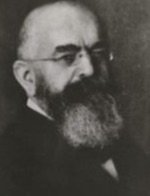
- Date of Birth: September 30, 1849
- Born City: Bauma, Canton of Zurich
- Born State/Country: Switzerland
- Parents: Johann Jakob (also recorded as Hans Jakob Kägi), a public elementary school teacher in Bauma, & Elisabetha Kundig Kägi.
- Date of Death: February 14, 1923
- Death City: Rüschlikon, Canton of Zürich,
- Death State/Country: Switzerland
- Married: Anna Karolina Denzler, 1878.
- Education:
Zürich Gymnasium; studied Classical Philology, Sanskrit, and Comparative Linguistics, Zürich; linguistics, Leipzig; Ph.D., Tübingen 1873.
- Dissertation:
Kritische Geschichte des spartanischen Staates von 500–431 v. Chr. (Ph.D., Tübingen, 1873; published in Fleckeisens Jahrbücher für classische Philologie 6 (1873) 435-505).
- Professional Experience:
Private tutor (Hauslehrer), Wesendonck family, Zurich & Dresden, 1871-5; Privatdocent, Zürich Gymnasium, 1875-83; extraordinarius, 1883-93; ordinarius, 1893-1912; pres., managing comm., Schweizerisches Idiotikon.
- Publications:
Siebenzig Lieder des Rigveda, with Karl Friedrich Geldner and Rudolf von Roth (Tübingen: H. Laupp'sche Buchhandlung, 1875); Der Rig-Veda, die älteste Literatur der Inder (published in two parts,; (Leipzig: Otto Schulze, part I 1878; part II 1879; expanded 2nd edition in 1881; trans. R. Arrowsmith as The Rigveda: The Oldest Literature of the Indians (Boston: Ginn, 1886)); Griechisches Übungsbuch (Berlin: Weidmannsche Verlagsbuchhandlung, 1884; continuous expanded editions through the early 1900s); Kurzgefaßte Griechische Schulgrammatik (Berlin: Weidmannsche Verlagsbuchhandlung,1884; trans. James A. Kleist as Short Grammar of Classical Greek, with Tables for Repetition (St. Louis & London: B. Berfer, 1902)); Zur griechischen Schulgrammatik (Berlin: Weidmannsche Verlagsbuchhandlung,1888); Repetitionstabellen zur kurzgefassten griechischen Schulgrammatik (Berlin: 1893); Gariechisch-Deutsches Schulwörterbuch; Wörterbuch zu den Homerischen Gedichtes Griechisches Übungsbuch; First Lessons in Greek: Comprising the Noun and the Regular Verb in -Ω (trans. James A. Kleist as Greek Readings for Review: First Lessons in Greek comprising the Noun and the Regular Verb in – Ω (St. Louis and London: B. Herder, 1903 & numerous subsequent editions); Benselers Griechisch-Deutsches Schulwörterbuch zu Homer, Herodot, usw. (Leipzig & Berlin: Teubner, 1911).
Full bibliography: E. Schwyzer, BBJ 45 (1925) 83-5.
- Notes:
Adolf Kaegi’s (also Kaege) early interest in Sanskrit may be traced to the influence of the Zurich philologist Heinrich Schweizer-Sidler (1815-94), the University’s inaugural chair of Sanskrit and Comparative Linguistics, who explored the connection of German and the classical languages. Under Schweizer-Sidler Kaegi saw Greek not in isolation but as a member of an Indo-Germanic family. This approach to the origin of the classical languages was reinforced for Kaegi at Leipzig by Georg Curtius (1820-85) who was a pioneer in establishing Indo-European linguistics as a vital branch of Greek philology. Finally, at Tübingen, Kaegi trained under the Indologist Rudolf von Roth (1821-95), a founder of European Vedic scholarship.
Though he wrote his dissertation on Spartan history, once Kaegi left Tübingen he encountered enough interest in comparative linguistics to convince him that the key to understanding the development of European languages lay in historical text studies of Sanskrit. He published his edition of the Rig-Veda (1878-9), while just turning 30. This work proved so thorough and authoritative that it was soon translated into English. Kaegi used a deep philological analysis of the 1027 Vedic hymns to reconstruct the social, religious, and cultural life of early Vedic civilization. The work established Kaegi as one of Europe’s premier Indologists.
Comparative linguistics affected his revolutionary Kurzgefasste griechische Schulgrammatik in 1884. He simplified Greek by using the rules of comparative linguistics that he had learned from Sanskrit. His method greatly enlarged the understanding of how Greek words developed from early Indo-European roots. He was fortunate in having a faithful English translator for his school texts in the German-born Jesuit James Aloysius Kleist (1873-1949) starting when Kleist was 15. Following the retirement of Schweizer-Sidler, Kaegi assumed his chair at Zürich. He continued to study the origins of Greek language and to provide dictionaries. He also expanded his researches into Swiss-German.
- Sources:
Festschrift:
Festgabe Adolf Kaegi von schülern und freunden dargebracht zum 30. september 1919 (Frauenfeld: Huber, 1919).
E. Schwyzer, BBJ 45 (1925) 61-82; Gerhard Baader, NDB 10 (1974) 723; Wilhelm von Hartel, Curtius und Kaegi: eine Vertheidigung (Vienna: Tempski, 1888);
- Author: Ward Briggs