
All Scholars
KIRK, Geoffrey Stephen
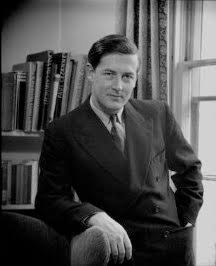
- Date of Birth: December 3, 1921
- Born City: NOTTINGHAM
- Born State/Country: England
- Parents: Frederic T., chief administrative officer of Northampton Polytechnic (now City University London); later factory manager at Stapleford, near Nottingham, & Edith or Enid Pentecost K.
- Date of Death: March 10, 2003
- Death City: Rake, West Sussex
- Death State/Country: England
- Married: Barbara Traill, 1950-75; Kirsten Jensen, September 1975-2003.
- Education:
Shirley House prep school (Bushey/Watford); Rossall School, Lancashire; scholarship, Clare College, Cambridge,1940; B.A., Cambridge, (First Class in Classical Tripos Part I and Part II), 1946.
- Professional Experience:
Royal Naval Volunteer Reserve, 1941-5; Distinguished Service Cross, 1945; Research Fellow, Trinity Hall, Cambridge, 1946-50;; British School at Athens, 1947–8; Commonwealth Fund Fellow, Harvard, 1949–50; Official Fellow, Trinity Hall, 1950; University Lecturer, Cambridge, 1952, Reader, 1961; Professor of Classics, Yale University, 1965–70; Sather Professor of Classical Literature, UC Berkeley, 1969; Professor of Greek, University of Bristol, 1971–4; Regius Professor of Greek, Cambridge & Fellow, Trinity College, 1974–82; Andrew W. Mellon Professor, Tulane University, 1979; Fellow, British Academy, 1959.
- Publications:
Books:
Heraclitus: The Cosmic Fragments (Cambridge: Cambridge U. Press, 1954); The Presocratic Philosophers: A Critical History with a Selection of Texts, with John E. Raven, (Cambridge: Cambridge U. Press, 1957; rev. 1964; 2nd edn. (with M. Schofield replacing the late Raven, 1983; Spanish trans. as Los filósofos presocráticos. Historia crítica con selección de textos (Madrid: Ed. Gredos, 1969)); The Songs of Homer (Cambridge: Cambridge U. Press, 1962; Spanish trans. as Los poemas de Homero (Buenos Aires: Paidós, 1968)); Homer and the Epic: A Shortened Version of The Songs of Homer(Cambridge: Cambridge U. Press, 1965); Myth: Its Meaning and Functions in Ancient and Other Cultures (Sather Classical Lectures, vol. 40) (Cambridge: Cambridge U. Press; Berkeley and Los Angeles: U. of California Press, 1970; Italian translation as Il mito. Significati e funzioni nella cultura antica e nelle culture alter (Naples: Liguori 1980); German translation as Griechische Mythen: ihre Bedeutung und Funktion (Berlin: Medusa, 1980; Reinbek: Rowohlt, 1987)); The Bacchae of Euripides (translation and commentary) (Englewood Cliffs, N.J.: Prentice-Hall, 1970); The Nature of Greek Myths (Harmondsworth: Penguin Books, 1974; Italian trans. as La natura dei miti greci (Bari: Laterza, 1977); Homer and the Oral Tradition (Cambridge: Cambridge U. Press, 1976); Periclean Athens and the Decline of Taste(Andrew W. Mellon Lecture) (New Orleans: Graduate School of Tulane University, 1979); The Iliad: A Commentary, Volume I: Books 1–4 (Cambridge: Cambridge U. Press, 1985); The Iliad: A Commentary, Volume II: Books 5–8 (Cambridge: Cambridge U. Press, 1990).
Articles:
“Some Points Raised by Heraclitus fr. 12 D,” PCPS 180 (1948-9) 1-2; “Ships on Geometric Vases,” ABSA 44 (1949) 93-153; “Heraclitus and Death in Battle,” AJP 70 (1949) 384-93; “The Michigan Alcidamas-Papyrus; Heraclitus fr. 56D; The Riddle of the Lice,” CQ 44 (1950) 149-67; “Natural Change in Heraclitus,” Mind 60 (1951) 35-42; “The Problem of Cratylus,” AJP 72 (1951) 225-53; “The Ship-Rhyton in Boston,” AJA 55 (1951) 339-43; “Some Problems in Anaximander,” CQ 49 (1955) 21-38; “A Passage in De plantis,” CR N.S. 6 (1956) 5-6; “The Interpretation of Hesiod, Theogony 736 ff.,” PCPS N.S. 4 (1956-7) 10-12; “Logos, ἁρμονίη, lutte, dieu et feu dans Héraclite,” RPhilos 147 (1957) 289-99; “Men and Opposites in Heraclitus,” MH 14 (1957) 155-63; “The Extent of Heraclitus fr. 92 D,” AFC 7 (1959) 5-12; “Ecpyrosis in Heraclitus. Some Comments,” Phronesis 4 (1959) 73-6; “Homer and Modern Oral Poetry. Some Confusions,” CQ 10 (1960) 271-81; “Parmenides' Refutation of Motion,” with Michael C. Strokes, Phronesis 5 (1960) 1-4; “Popper on Science and the Presocratics,” Mind 69 (1960) 318-39; “Objective Dating Criteria in Homer,” MH 17 (1960) 189-205; “Dark Age and Oral Poet,” PCPS N.S., 7 (1961) 34-48; “Sense and Common-Sense in the Development of Greek Philosophy,” JHS 81 (1961) 105-17; “The Structure and Aim of the Theogony,” in Hésiode et son influence(Geneva-Vandœuvres: Fondation Hardt, 1962) 61-107; “A Fragment of Sappho Reinterpreted,” CQ 13 (1963) 51-2; “The Trojan War: III : The Character of the Tradition,” JHS 84 (1964) 12-17; “Heraclitus's Contribution to the Development of a Language for Philosophy,” ABG 9 (1964) 73-7; “The Homeric Poems as History,” The Cambridge Ancient History, II,39b (Cambridge: Cambridge U. Press, 1964); “Studies in Some Technical Aspects of Homeric Style,” YCS 20 (1966) 73-152; “Formular Language and Oral Quality,” YCS 20 (1966) 153-74; “War and the Warrior in the Homeric Poems,” in Problèmes de la guerre en Gréce ancienne, á la mémoire d'André Aymard, ed. Jean-Pierre Vernant (Paris: Mouton, 1968) 93-117; “Homer's Iliad and Ours,” PCPS 16 (1970) 48-59; “Old Age and Maturity in Ancient Greece,” Eranos-Jahrbuch40 (1971) 123-58; “Aetiology, Ritual, Charter. Three Equivocal Terms in the Study of Myth,” YCS 22 (1972) 83-102; “Greek Mythology. Some New Perspectives,” JHS 92 (1972) 74-85; “I limiti della ricerca nella mitologia greca,” RSI 84 (1972) 565-83; “The Search for the Real Homer,” G&R 20 (1973) 124-39; “On Defining Myths,” in Exegesis and Argument: Studies in Greek Philosophy presented to Gregory Vlastos, ed. Edward N. Lee, Alexander P. Mourelatos, & Richard P. Rorty (Assen: Van Gorcum, 1973) 61-9; “Methodological Reflexions on the Myths of Heracles,” in Il mito greco. Atti del Convegno internazionale (Urbino 7-12 maggio 1973), ed. Bruno Gentili & Giuseppe Paioni (Rome: Ed. dell' Steneo e Bizzarri, 1977) 285-97; “Some Methodological Pitfalls in the Study of Ancient Greek Sacrifice (in particular),” in Le sacrifice dans l'antiquité. Huit exposés suivis de discussions, ed. Oliver Reverdin & Jean Rudhardt (1980) 41-90; “Orality and Structure in the Homeric Hymn to Apollo,” in I poemi epici rapsodici non omerici e la tradizione orale. Atti del convegno di Venezia 28-30 settembre 1977, ed. C. Brillante, C., Mario Cantilena, & Carlo Odo Pavese (Padua: Antenore, 1981) 163-82; “Deux nouveaux commentaires d'Homère,” REA 83 (1981) 285-90; “Orality and Sequence,” in Language and Thought in Early Greek Philosophy, ed. Kervin Robb (La Salle, IL: Hegeler Inst., 1983) 83-90; “The Iliad. The Style of Books 5 and 6,” in Aspects of the Epic, ed. Tom Winnifrith, P. Murray, & Karl Watts Gransden (New York: St. Martin’s Press, 1983) 16-31; Myth and Artifice in the Sophoclean Oedipus,” in Edipo. Il teatro greco e la cultura europea. Atti del convegno internazionale, Urbino 15-19 novembre 1982, ed. Bruno Gentili & Roberto Pretagostini (Rome: Ed. dell’ Ateneo, 1986) 11-19; “The Circumstances of Monumental Composition,” in Homer: Critical Assessments, ed. De Jong, Irene J. F (London: Routledge, 1999) 256-72.
- Sources:
Memoir:
Towards the Aegean Sea: A Wartime Memoir (Upton-upon-Severn, Worcestershire: Square One Publishing, 1997).
Hugh Lloyd-Jones, PBA 124 (2004) 141-8.